














As tornado season approaches in April, local officials advise residents to have a plan in case of an emergency weather situation.
There are no public storm shelters in Douglas County, according to John Stipetich, deputy emergency management director.
“We would advise people to connect with friends, neighbors or family members who may have better sheltering options in their own homes, or to look for public businesses, public areas like that, that may be open late at night or during the time that severe weather may be approaching,” Stipetich said.
Having a designated shelter for residents is difficult logistically, Stipetich said. If a church or business agrees to take in residents in an emergency, someone would need to be responsible for opening the building. If that person isn’t reachable, residents would potentially be left waiting outside in severe weather.
“It’s very difficult to get organizations to agree to those agreements, because there is a liability concern there if the organization fails to get the shelter opened,” Stipetich said.
Additionally, residents driving to a shelter introduces more risk.
“If you’re waiting until the tornado sirens are going off to then drive across town to a shelter, it can put you in more danger because you may not know where the hazard is when you leave your home,” Stipetich said.
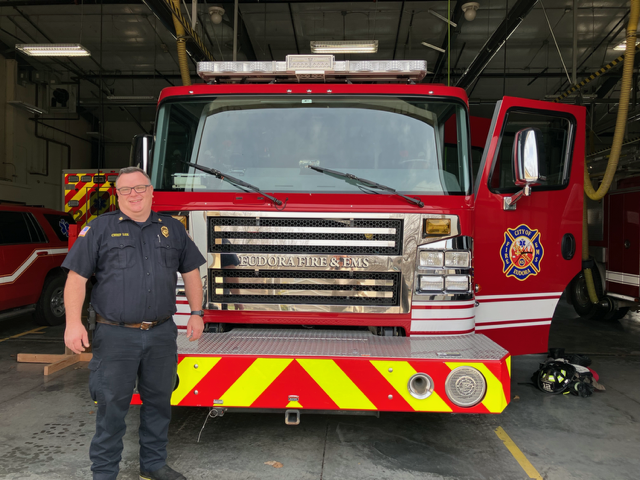
For residents who live in mobile homes without basements, Fire Chief Justin Lee also recommends they connect with friends. A last resort is sheltering in a car.
“Mobile homes are not safe, as we know, unfortunately,” Lee said. “There is your vehicle, still not the best choice, but if you have to get in your vehicle and put your seat belt on, stay in your vehicle.”
If a storm hits while residents are in an open public building during the daytime, they can stay there temporarily. However, buildings aren’t guaranteed to stay open past hours.
“I always tell people, when you go into someplace, you know, look where the exits are. Just be aware where the storm shelter is,” Lee said. “Just be aware of your surroundings is important.”
When a tornado siren goes off, residents should heed the warning, officials advised.
“They’re tested during every other Monday during storm season at 12 p.m. So then you just need to be aware, if you hear it any other time, that’s not testing. Be aware of that,” Lee said.
Lee recommends creating an emergency kit with necessities like a first aid kit, shelf stable food, water, a change of clothes, emergency contacts, medicines, and a power block or phone charger.
“Just have it ready to go. And you only have to check it like once a year,” Lee said.
He said, if needed after severe weather conditions, officials can use schools or churches as a distribution point for emergency supplies through a partnership between the Red Cross and Douglas County.
Students and teachers practice severe weather drills across the district three times a year, including in March in preparation for tornado season, Superintendent Stu Moeckel said.
“We have electronic communications that go out to all of our buildings at that time, and our students are then escorted with faculty and staff to a safe location for the duration of the drill,” he said.
Students would shelter in the schools’ designated storm shelters in the case of severe weather during school hours.
Officials recommend residents sign up for the Northeast Kansas Regional Notification System. Residents can sign up for free to receive weather alerts via call, text or email.