














Planning Commission meetings and decisions must be considered in a specific order of business, or else the city might expose itself to lawsuits.
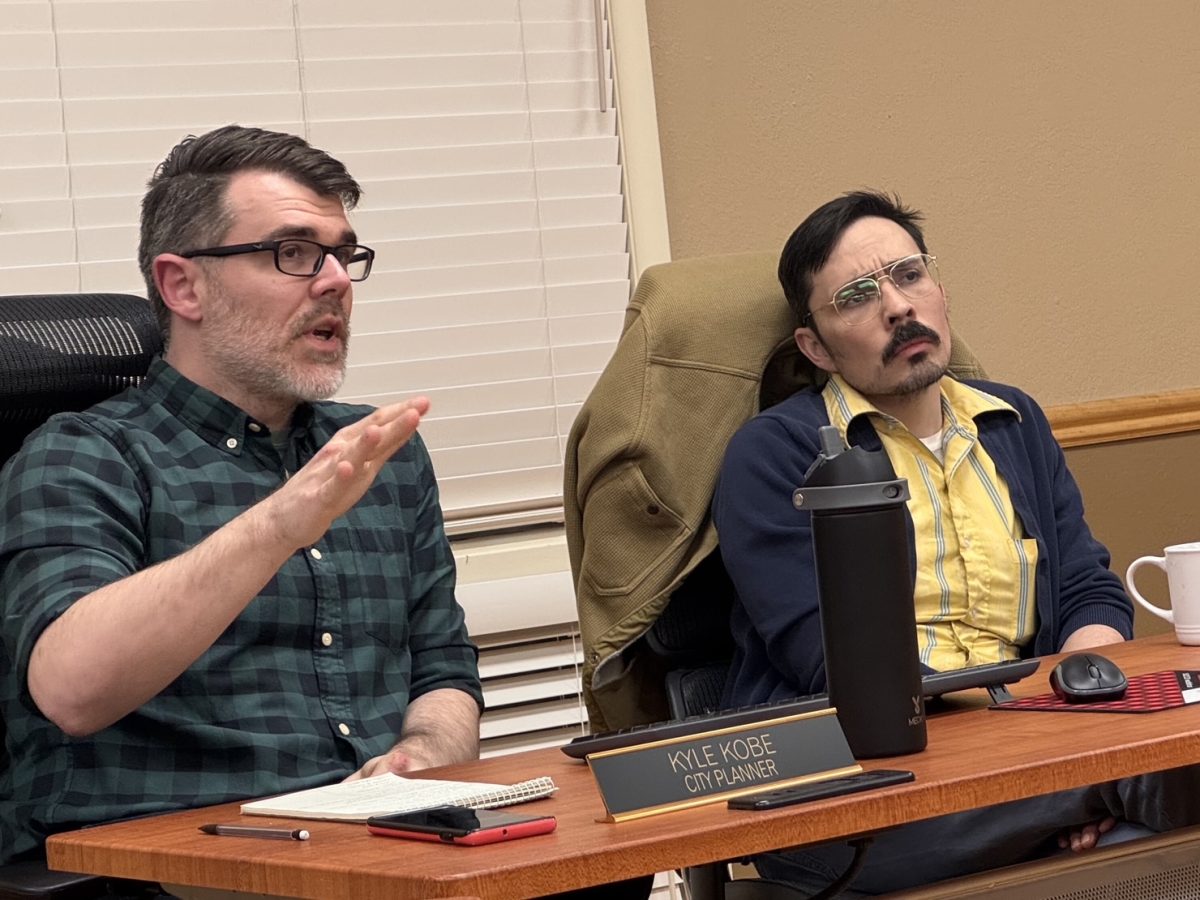
That’s according to City Planner Kyle Kobe, who gave an orientation to the Planning Commission Wednesday night.
Kobe said the role of the commission is to review or conduct public hearings to make recommendations to the City Commission.
“Most codes designate the Planning Commission as like a first line,” Kobe said. “You’re also putting your thoughts on the record so they can be considered with staff comments, board comments and public comments.”
Legal guidelines that start from the federal government and run through local codes impact the Planning Commission. Kobe said wireless communication towers, for example, are under federal regulatory authority and local boards are restricted from regulating them in most capacities.
Commissioner Lewis Cox asked about if planning commissioners should consider outside factors, such as taxpayer costs, or if they follow the legality of each application.
Kobe said the role of the Planning Commission is to evaluate each application on the merits of its case and what state statute dictates.
“By the time things make it to you, it’s been through a lot of filtering,” Kobe said. “There’s several sequences of applications that can come your way. There can sometimes be five different applications for the same project that touch on each of these regulatory frameworks.”
City Manager Zack Daniel said if planning commissioners act subjectively and deny a case not based on any local or state statute, the city may open itself up to potential legal issues.
“If I apply for a rezoning of some kind of case, and the application is denied for reasons that are outside of our local code or state statute, that applicant may have a right to say I was denied my property rights,” Daniel said. “A lot of times our recommendations are baked around our city’s legal exposure and giving property owners their rights within the city limits.”
Kobe said commission members act in a quasi-judicial capacity, and commissioners should clearly state their reasons for voting, especially if it is a denial.
“The more refined that can be, the more quantifiable and reason making the decision is, will hold up better,” Kobe said. “Each case should be reviewed under its own merits.”
Eudora’s parameters outline the criteria for approving an application, including the character of the neighborhood, consistency with the ordinances of the city and the extent to which the application would detrimentally affect nearby property. Kobe said other factors include adequacy of public utilities, sustainability of property use and the length of time the property has remained vacant.
Commissioner Pat Jankowski asked if the commission can approve a motion with conditions, and Kobe said it can.
Kobe said the Planning Commission should expect to see an increase in items considered every meeting, and needing to conduct meetings more often.
“The days of the Planning Commission meeting three or four times a year will probably be a thing of the past,” Kobe said. “I would anticipate more multi-item applications, more stuff coming down the line. I don’t have a crystal ball, but I would be surprised if that’s not the way it is.”
In other business, building inspector Curt Baumann said the city approved 254 building permits in 2025. Baumann said the city saw 12 housing development starts, two duplexes and one apartment complex.
“We’ve been quite a bit higher, but I’ve seen years where we weren’t even 200,” Baumann said.
The commission also elected Grant Martin and Josh Harger to serve as chair and vice chair. Martin was absent from the meeting, and one position is still open. Commissioner Sam Campbell was scheduled to take his oath of office, but was absent from the meeting.