












Nearly 90 Kansas schools now participate in official esports competitions, leading the Kansas State High School Activities Association to host its first state tournament earlier this year.
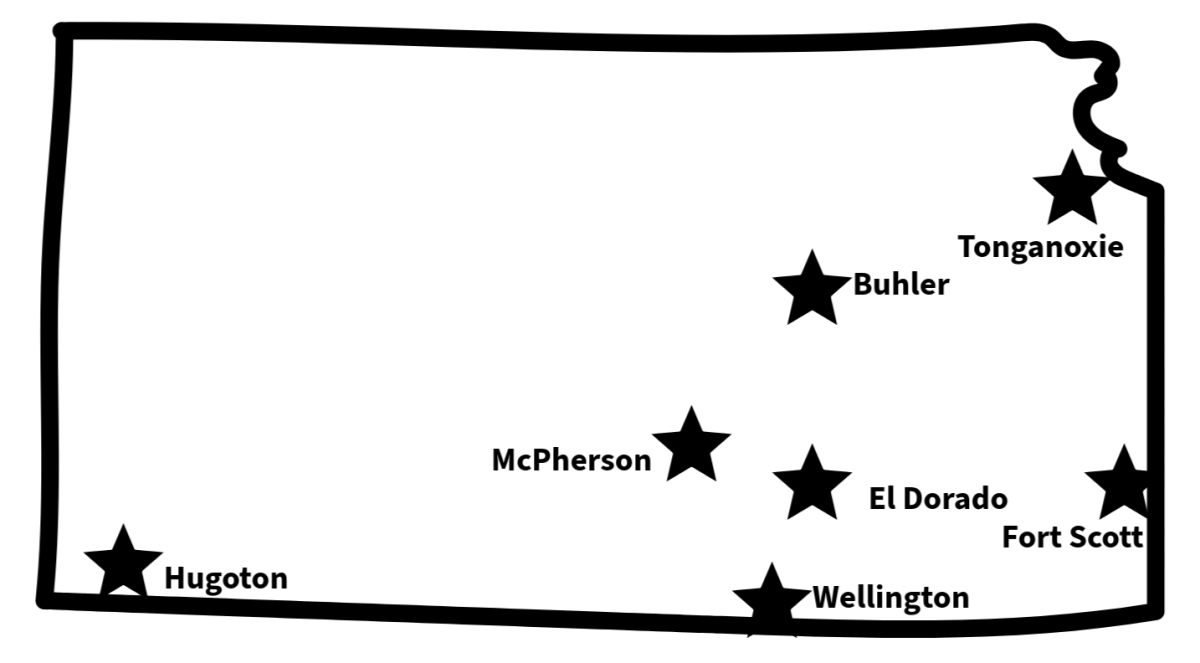
Seven 4A schools around the state are already taking part: Buhler, El Dorado, Fort Scott, Hugoton, McPherson, Tonganoxie and Wellington.
Although Eudora doesn’t yet have its own program, The Eudora Times reached out to area high school players, coaches and the state activities association to understand the growing interest in esports.
What are esports?
Esports are video game competitions. Esports matches have similarities to how track and field is scored. Teams have small groups of players who specialize in certain video games. Teams receive points from their small groups where they are tallied as a whole to determine the winner.
Esports does fit under the definition of sport, according to Brittany Jacobs, an associate professor who specializes in esports programs at American Military University in West Virginia.
To excel at esports, competitors must have physical skills in reflexes and hand-eye coordination just as they need in other sports, she said in a recent report.
Esports are also being recognized more at the collegiate level. The University of Kansas has had a varsity esports team since 2020.
Collegiate esports allow talented gamers an opportunity for team-gaming experiences, Kansas esports program coordinator Daniel O’Connell said.
“It’s a fun environment to compete because you’re playing against people usually on a level playing field,” O’Connell said.
KU has 11 teams with 62 players who compete in League of Legends, Overwatch 2, Rocket League, Valorant and Super Smash Bros, according to its website.
“Broadly speaking, competitive video game playing is becoming more popular. It’s becoming more mainstream. When I joined the Overwatch team and I told 100 people on campus, I bet only five would have known what that meant. If I did that now, I bet 70-80% would know what that is,” O’Connell said. “The other reason is on the college side. You’re seeing a lot more buy-in from universities, both big and small.”
The money in esports is on the rise. Esports had global revenue of just under $650 million in 2025 with projections over $2 billion by 2034, according to Fortune Business Insights. Esports revenue comes primarily from sponsorships and viewership.
Rising interest
Across the state, student interest in esports had been growing since the pandemic, Assistant Executive Director of KSHSAA Jeremy Holaday said.
When looking at esports participation in other states, KSHSAA found roughly 80% of participants in Alabama’s esports state tournament were not involved in other school activities prior to esports. The association wanted to bring a similar effect to Kansas, Holaday said.
“The ultimate purpose of the activities association is to support kids in participation,” Holaday said. “The more kids we have competing in school sports and activities, we firmly believe they will become better students.”
In 2024, KSHSAA began to plan a state tournament after reporting at least 60 Kansas schools offered esports in some capacity.
Eighty-eight total schools with 905 students competed in official contests for the 2025-2026 season, according to KSHSAA.
During the Kansas state tournament in January, students from 20 schools competed in Mario Kart, Super Smash Bros and Rocket League tournaments.
Local interest
If Eudora students decided they wanted to compete in esports, the district has a process that needs to be followed for new activities.
A group of students or parents would need to bring a proposal to the School Board that outlines a budget and facilities, Athletic Director Cara Kimberlin said.
The funding for a new organization would come entirely from the organizers for the first two years, 25% would be covered by the district in year three, 50% in year four and then funding for the organization would come entirely by year five.
This procedure was introduced to guarantee recurring student interest, Kimberlin said.
Some Eudora students recently said they would be interested in esports.
“It seems kind of fun,” freshman Kamden Gentry said.
Juniors Grayson Moody and Brian DeLaRosa expressed interest in playing Rocket League, one of the games offered through KSHSAA.
Tonganoxie has had an esports program for the past three years. The program started with students playing at home while using the app Discord to coordinate practices. Tonganoxie was one of the seven 4A schools to participate in KSHSAA-sponsored competitions in the inaugural season.
“I just decided to take it upon myself to start an esports team,” head coach Jaime Fahlgren said. “It was something I love to do myself, and I felt like I could bring something to other kids at our school, maybe the kids who don’t excel at physical sports, so it could be a great opportunity to give them something to do.”
With the low rates of esports participants in other activities, esports are a way to get others the benefits and responsibilities of being on a school team, he said.
“They’re learning to be part of a team. They’re learning to communicate. You know, there are requirements such as grades and showing up for school, all these different things that they may not have had to deal with before,” Fahlgren said.
Junior Sam Chelbi joined the Tonganoxie esports team this season. This was his first time playing esports.
“You have to be coachable, and I feel this works both in a gaming room and on the field. You have to want to learn and try to develop. I also think that my teammates help push me,” Chelbi said.
After his first year with Tonganoxie, Chelbi has begun to receive interest from universities about playing esports. He remains undecided if he will play at the next level. He also believes the future of esports is bright.
“I feel the younger classes are more into it,” Chelbi said. “By the time I’m out of high school, it’s gonna be a big thing.”
Reach Trey Myers at [email protected].