













After 20 years as a Civil War reenactor, Tom Schmidt wants to make sure the history of that era isn’t forgotten.
Schmidt, a descendant of a Civil War veteran, has spent the past few years working with the Kansas Museum of History’s Save the Flag program to raise money to restore battle flags from that time.
Collaborating with museum curator Boone Dodson, Schmidt began the Adopt a Flag program as part of the Save the Flags program. Schmidt raises any dollar he can since one flag’s restoration can cost $10,000 to $40,000.
“The flags honor the memory of the soldiers and sailors of Kansas that served under them,” Schmidt said of why the project matters. “They were a symbol of pride of their service and dedication in time of desperate need.”
Battle flags dating from the Civil War to the Spanish-American War have remained in storage, tightly rolled up into tubes, at the museum since the 1960s.
The Kansas Museum of History has 75 flags and has only restored 16. Museum staff and a Civil War descendants group work to raise money for the expensive restoration of the flags, which are tattered and marked by dirt and blood.
Schmidt is full of Civil War soldiers’ stories passed down through generations. He said he doesn’t like the way history is taught in schools.
“It’s dates and events,” Schmidt said. “But if you weave in the personal stories and the poignant moments, it becomes much more than that. It becomes personal. It becomes a lot more real. It becomes something you can relate to.”
Schmidt said Kansans gathered in Topeka in 1866 to welcome soldiers home and celebrate the prior year’s end of the Civil War. The Union’s battle flags were displayed in the state Capitol building until 1914. The flags were later moved to the Memorial Building in downtown Topeka.
Made of delicate silk, the flags were exposed to harsh light, hot summers and cold winters at the Memorial Building, said Nikaela Zimmerman, collections manager at the Kansas Museum of History.
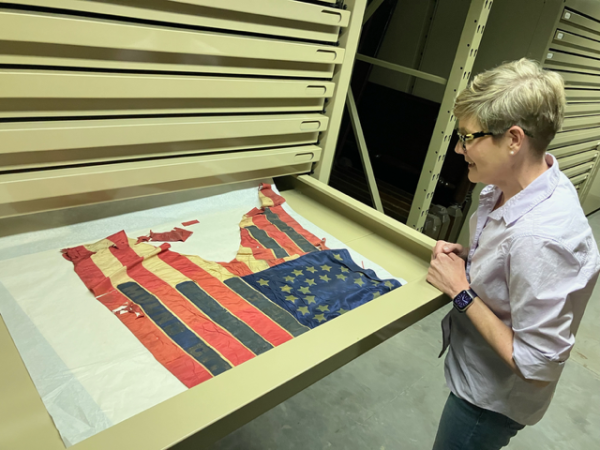
“So, they continued to sustain damage just from the environment throughout their time on display,” Zimmerman said. “The condition they’re in now is about what they were in when they were rolled up in the ‘60s.”
Members of the Kansas Historical Society started the Save the Flags program to raise money for their restoration in the 1990s and have conserved 16 flags since then.
The program relies on donations and occasional grants. Two years ago, Schmidt and Dodson began the Adopt a Flag program. Anyone can donate but to be considered adoptive, one must donate $500.
“I put together an operating plan, a marketing plan and a fundraising plan to help revitalize the state flags program,” Schmidt said. “That involved marketing opportunities, spreading the word, redoing the web page on the website.”
When enough money is raised, the museum sends a flag to Textile Preservation Associates in West Virginia. There, professional conservators clean the flags and piece together tiny shreds like a puzzle.
Schmidt was recently at the museum and saw conservators carefully pull a flag out of its tube.
“All of a sudden there were all kinds of pieces flying all around, small little pieces. They picked them all up with tweezers,” Schmidt said.
Some flags are up to 6 feet long, making restoration a time-consuming process. Schmidt said a recent restoration took 104 hours.
The damage to the flags also tells stories about the war and Union soldiers.
“In addition to there being damage, soldiers also took bits of the flags as souvenirs sometimes,” Zimmerman said. “If you see a spot on a flag that is like a perfectly straight edge, you know, a nice clean cut, that’s where people have taken souvenirs.”
Restoring the flags also tells researchers more about the Civil War and how the flags were used. For example, a black ribbon signifies that the flag was used in a funeral, Zimmerman said.
“Our goal is to preserve, but is to also learn more about the history of the Civil War and the veterans who served based on evidence that we find in the flags themselves,” Zimmerman said.
Eight flags are on display at the museum. Zimmerman said these flags are protected in pressure mounting and plexiglass with a UV filter. There are no windows in the gallery and lighting is controlled. Climate control maintains a temperature of 68 degrees and 50% humidity.
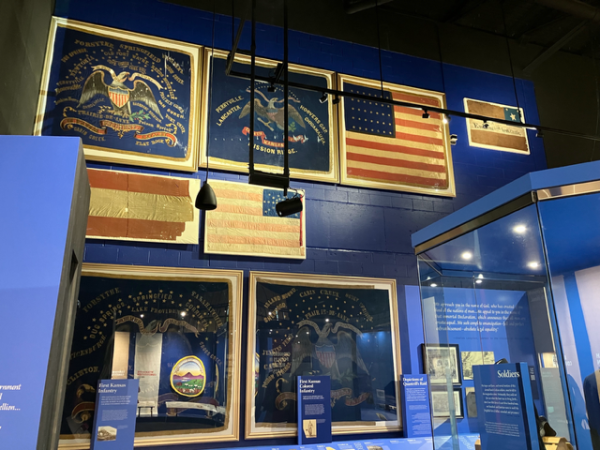
Due to the time consuming and expensive cost of flag restoration, the goal of conserving all 75 flags will likely take decades. People who are passionate about the wars keep the legacy going.
“I mean, how many times do you get to see an artifact that was on a battlefield during the Civil War? It’s crazy,” Zimmerman said. “We’ve been fortunate that everybody has seen the importance of them and wants to continue the project.”
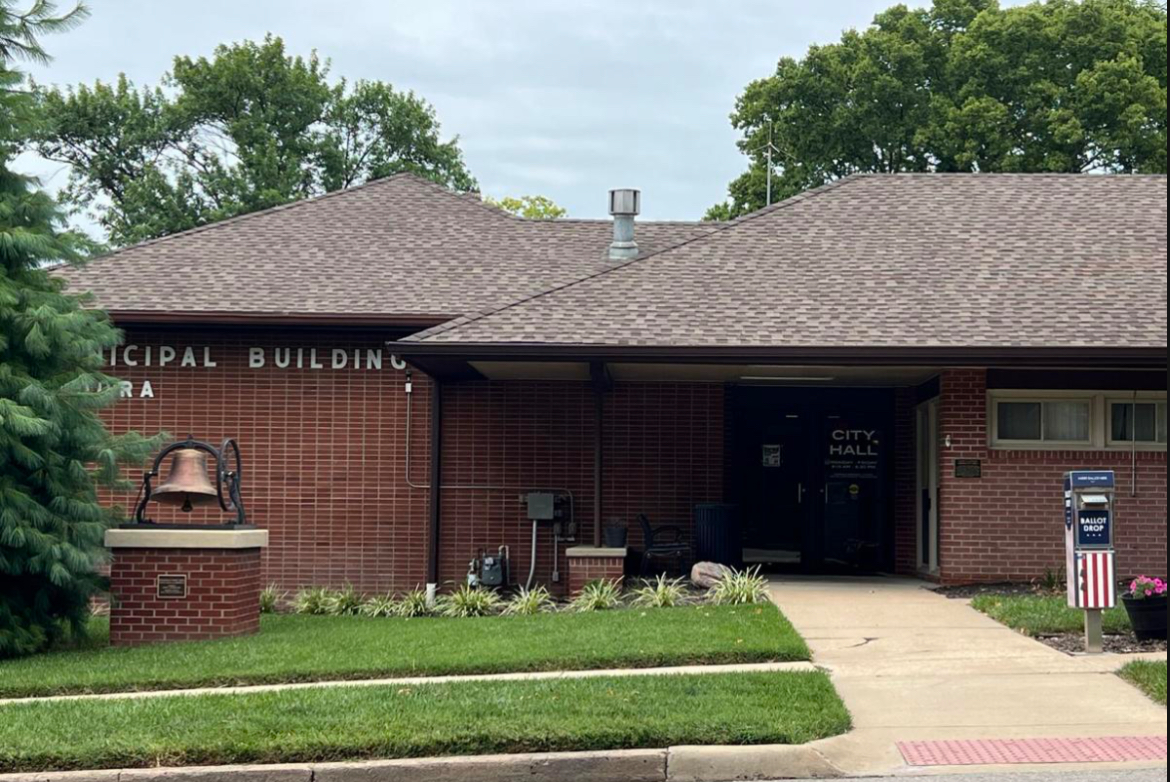
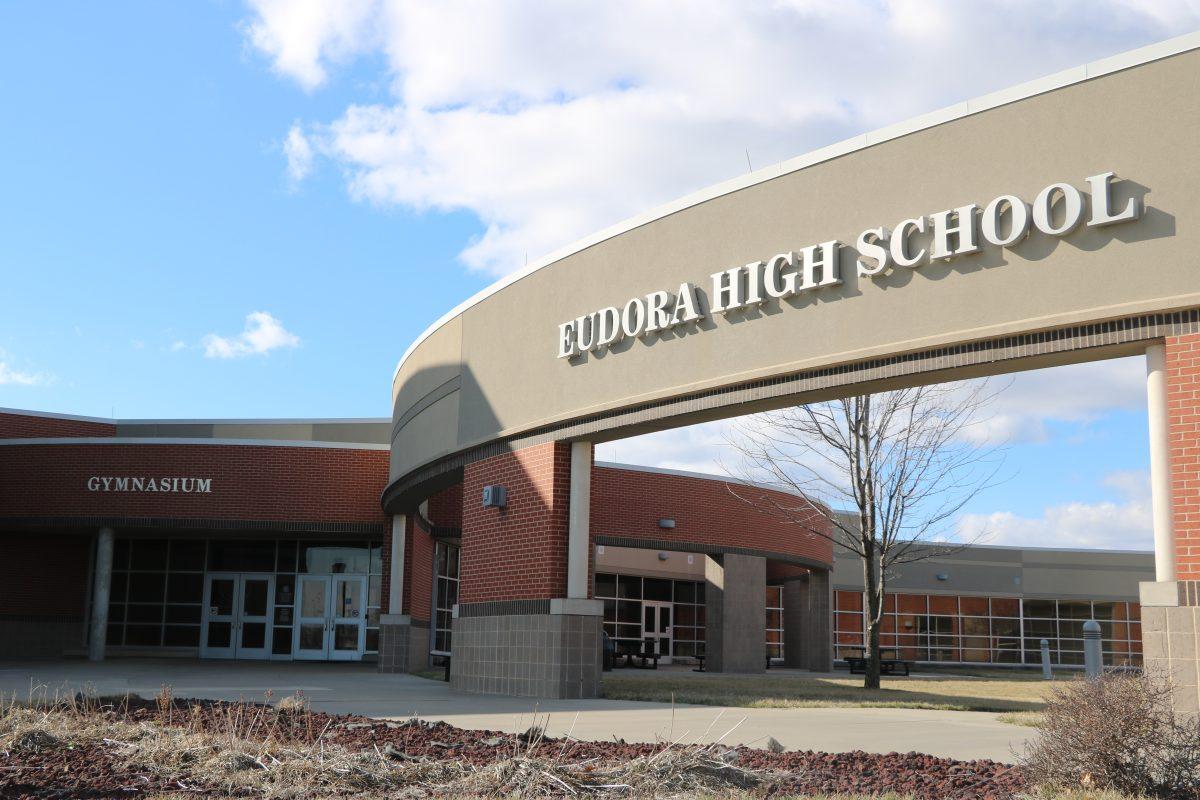
Ben Terwilliger, executive director of the Eudora Area Historical Society, said Eudora residents were at the center of the slavery debate during the Civil War, afraid of what could happen. The flags represent a defining event in Eudora’s history.
“I’m thrilled that Tom, who’s a Eudora resident, was the person to lead this effort, very pleased and very proud of him,” Terwilliger said.
Schmidt and Zimmerman urge anyone interested to donate or adopt a flag online.
“If you are just an individual who wants to give a little, you have $5 to give, we’re not going to say no, you know, every little bit helps. If you’re not able to donate financially, just word of mouth is great,” Zimmerman said.
Reach reporter Julia Hanson at [email protected].