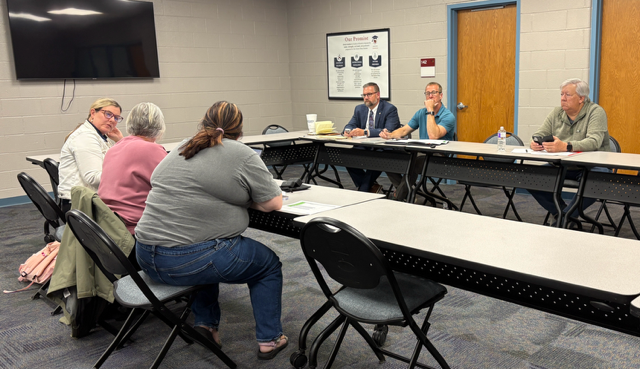














Superintendent Stu Moeckel’s contract was extended until June 2028 by the School Board during its meeting Thursday, following a 10-minute executive session.
Board President Mark Chrislip said Moeckel has served the district well.
“He’s done an excellent job in leadership, staff development, an excellent job in communication, handling the budget,” Chrislip said. “His presence in the district is outstanding.”
Moeckel said he is very thankful to work in the district for a great board.
Moeckel’s salary is $166,400, which includes a 3% raise that all administrators received in July.
In other business, Moeckel gave an update on the AI Advisory Committee during the meeting. The committee had its first meeting in November, and Moeckel said it was a great meeting and there was a lot of expertise in the room.
The committee, made up of administrators, elementary parents and staff members, is tasked with recommending a district artificial intelligence policy to the board next year. This policy will include guidelines on AI use in classroom instructions and what constitutes as cheating.
The committee has meetings scheduled in January, February, April, May and June, with a presentation scheduled at the August School Board meeting. After this meeting, the district hopes to begin implementing the new policy.
Moeckel said anyone who is interested can join the open committee.
Board member Claire Harding said she appreciates the district’s process and asked if it would implement the new artificial intelligence guidelines in the updated Kansas Association of School Boards policies.
Moeckel said the policies are slightly different in that the association’s policy offers guidelines on the negative student uses of AI while the district’s policy will focus on its daily use within the classroom.
“I like some of the policies it adds there to just give our building principals, our administrators, a little stronger backing on that,” Moeckel said. “We have had a few instances here and there that were dealt with more as a discipline. This would provide some more weight to that.”
The state association’s updated recommendations were another agenda item at the meeting. One updated recommendation Moeckel mentioned is that while teachers can still discuss controversial issues, they should leave their personal views out of the discussion.
“Letting our people know that it is okay to discuss controversial topics, but they’re not to sway one or the other,” Moeckel said.
The board also added a new “religious objections” section to the policies, which would require the district to notify parents about “any activity addressing topics that are known to be or are reasonably ascertainable to be contrary to the religious beliefs of the parents” and give them the option to opt out.
Moeckel said he was concerned about this because he does not know how it could be implemented. He said the board will have to figure out what the best practices are.
In other business, the board approved a memorandum of understanding with the developers of the Shadow Ridge housing project next to the high school. This agreement creates an easement that will allow the developers to install drainage systems. Neither the district nor developer will be allowed to build on the new easement.
Moeckel said the easement will benefit the district because it will get a new stormwater system at the developer’s expense. However, the district and developer will share the cost of managing the water detention basin on the property.
Board member Joe Hurla said he believed the Shadow Ridge development should pay all the costs for long-term basin maintenance because the district will be paying for short-term maintenance, like mowing.
“I think it’s every 10 or 20 years or something that that has to be dug out,” Hurla said. “I don’t know that we’ve ever done it in the last X number of years, but that means if it does happen, it’s because of the addition of this.”
Member Heather Whalen agreed with Hurla, but the board ultimately ended up passing the memorandum as written 7-0.
In other business, the board also received the auditor’s report for fiscal year 2025, which ended in June. The auditor said the district had one statutory violation, which was that the at-risk pre-K fund went over its adopted budget amount.
Overall, though, the auditor said it was a great audit. He said the district did a great job financially managing the Title I Migrant Program.
The audit recommends the district review its unencumbered cash balances to see if it meets the recommended levels of at least two months of regular operating expenditure in these balances. The audit also noted that it noticed six transactions that included the payment of sales tax, which violates the district’s credit card policy. It recommends that the district not pay sales tax when not required. The auditor said they will review the status of recommendations at the next audit.
The board also reviewed the draft of the 2026-27 school year calendar, and Moeckel said it is similar to the current calendar. Moeckel said the only major change is that the new calendar adds a four-day weekend from Feb. 12-15.
Harding gave a report on the East Central Kansas Cooperative in Education and said it expects to be operating in a budget deficit again next year. Last year, it ended the year with a $230,000 deficit, and this year’s end projection is another $400,000. Harding said most of the money goes toward staff. The cooperative provides special education to eligible students in Baldwin City, Eudora and Wellsville, according to its website.
Hurla asked if other cooperatives are facing the same struggles, and Harding said the East Central Kansas cooperative is doing fairly well compared to many other districts. Moeckel said there’s not a district in the state that isn’t dealing with special education funding issues.
In other business, the board went into a second executive session for 22 minutes and approved an early graduation request from a student.
At the beginning of the meeting, Early Learning Center Director Kristen Lewis gave an update on its programs. She said student enrollment has grown from 101 last year to 125 this year. She said the center is focused on getting students ready for kindergarten through its FrogStreet curriculum, which is learning through play.
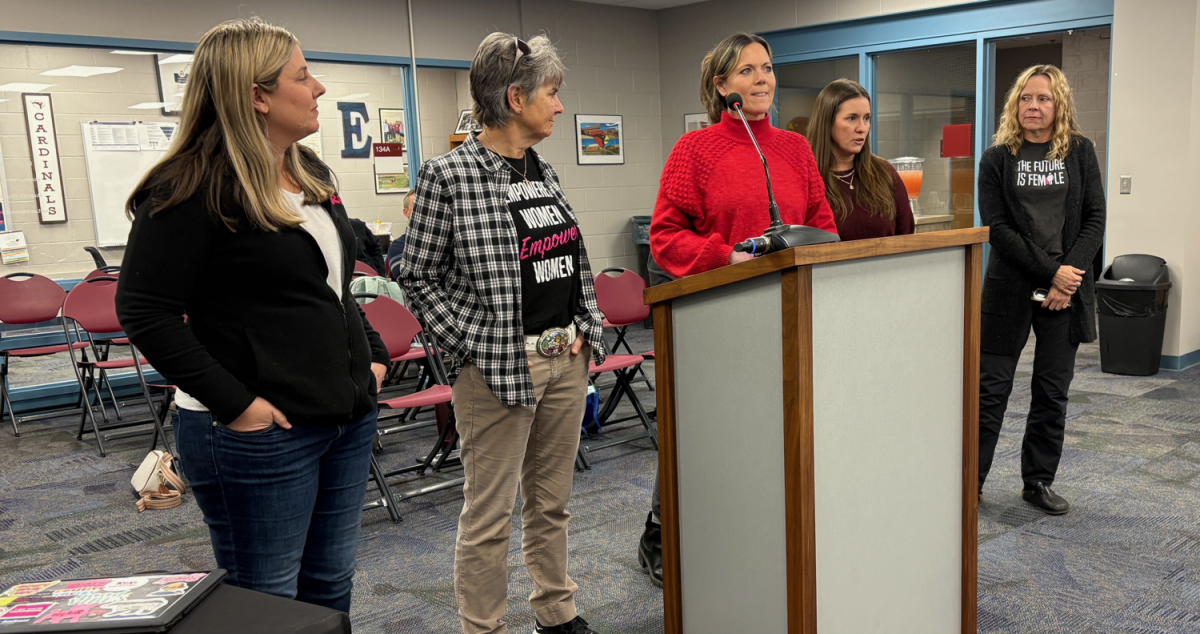
School leaders of the ROX program, which is a 20-week program for empowerment for girls, presented to the board. ROX stands for Ruling Our eXperiences, and the goal of the program is to teach girls about managing conflict, navigating relationships, developing coping skills and leadership training.
The school has programs for girls in sixth, ninth and 11th grades, and Eudora is the first district in Kansas to implement the ROX program.
Reach reporter Bella Waters at [email protected].